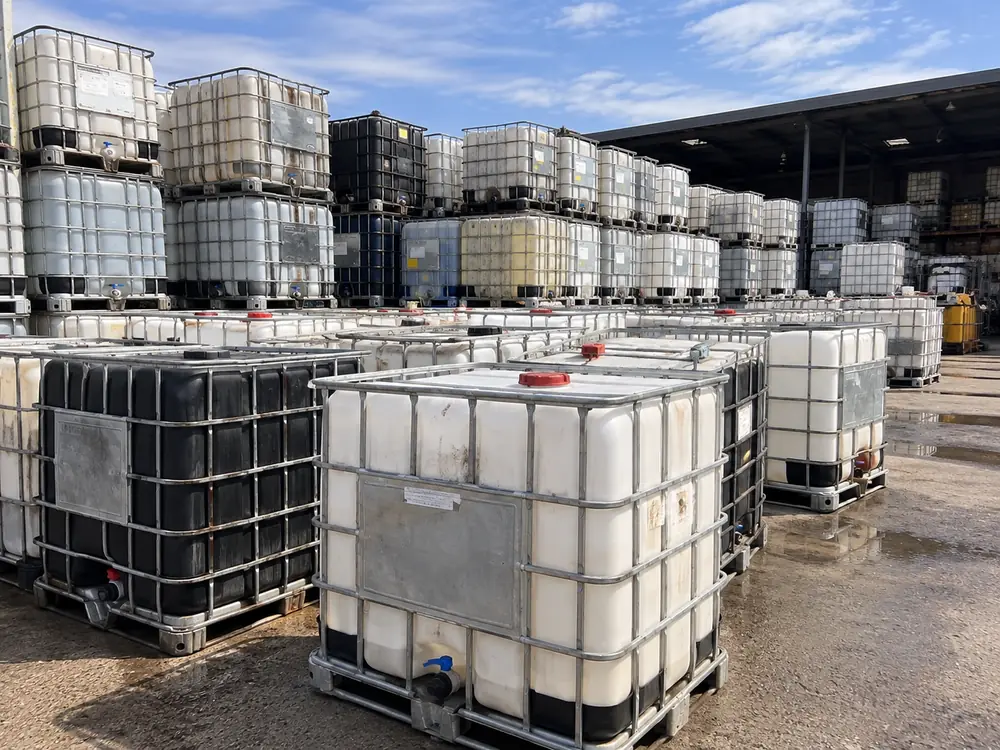
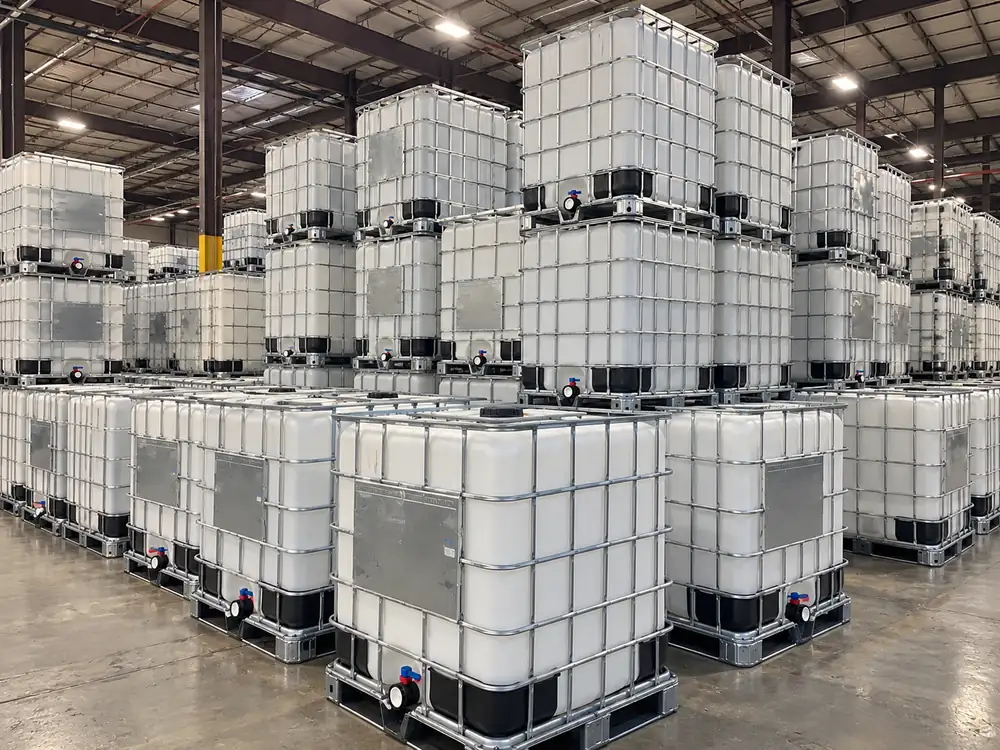
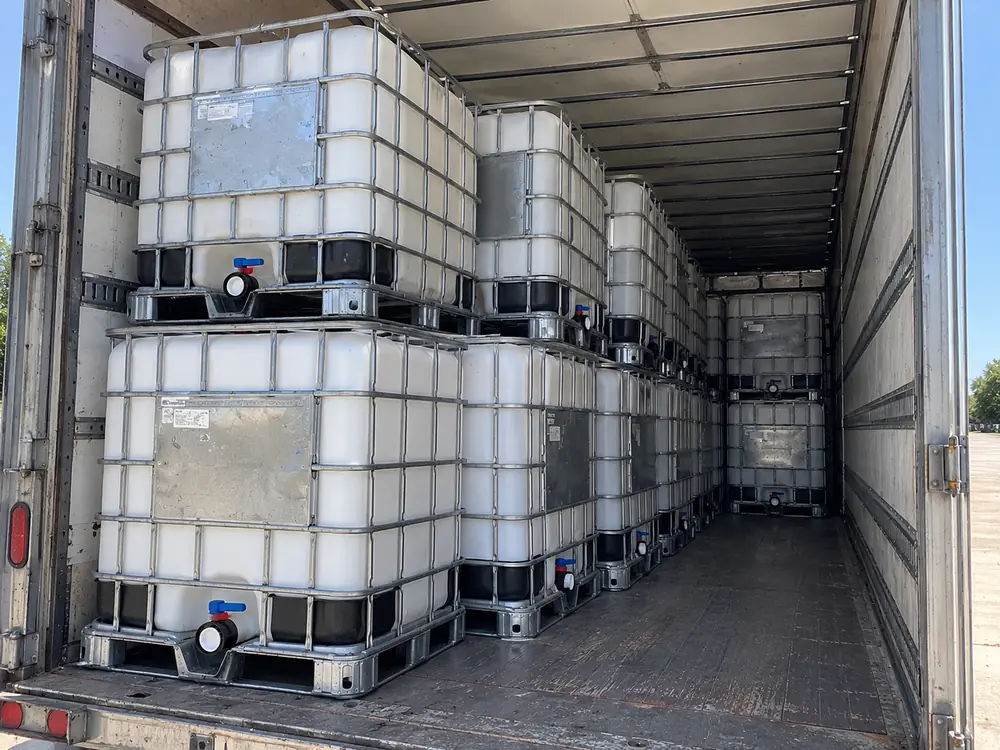
Six services,
one closed loop
We buy containers, wash them, haul them, lease them and — last of all — recycle them. Each service feeds the next, which is why we can price all of them better than a specialist doing only one.
Which service do you need?
Pick one on the form and give us the basics. Everything is quoted in writing, same business day where possible.
Tell us what you have.
We will tell you what it is worth.
Buying, selling, washing, hauling or recycling — one form covers all of it. Replies come from a specialist in York, PA, by email, inside one business day.
Prefer plain email? Write to info@ibctotesreco.com — include your ZIP, quantity and what the totes last held.
Our six services are: buying your used totes (we pay, with freight included), reconditioning and washing (yours or ours), nationwide transport on our own equipment and partner lanes, documented recycling at true end of life, leasing and pooling for seasonal demand, and site cleanouts for yards with hundreds of mixed containers. Most customers use two or three of them together.
We buy your used totes
Written offers, freight included, weight tickets and a signed prior-contents record on collection. Lots from 4 units upward.
OpenReconditioning & washing
Three-stage rinse through hot caustic clean-in-place at 180°F, leak test, re-valve, re-mark. Your containers or ours.
OpenNationwide transport
Flatbed and dry van on our own Mid-Atlantic lanes, partner carriers to the lower 48, backhaul pricing where the lane allows.
OpenRecycling & regrind
HDPE granulation, steel and timber recovery, manifested residue disposal and a diversion certificate for your reporting.
OpenLeasing & pooling
Rent a float of graded totes for a campaign or a season and hand them back. Highest- utilisation reuse we have found.
OpenSite cleanouts
Mixed, stacked, weathered yards cleared in a day — including the lots other buyers walk away from.
OpenStart from your problem, not our service list
Find the sentence that sounds like your week.
| If this is your situation | The service | Turnaround |
|---|---|---|
| “We have 60 empties behind the building and no plan.” | We buy your used totes | 1 week, Mid-Atlantic |
| “We need 24 washed totes for liquid fertiliser by Friday.” | Reconditioned stock | Ex-stock |
| “Our own fleet comes back dirty and we have nowhere to wash it.” | Contract reconditioning | 72 hrs per batch |
| “We need 80 food-grade totes for an eleven-week campaign.” | Lease pool | 1–2 weeks |
| “Corporate wants evidence of what happened to 300 containers.” | Documented recycling | 2 weeks + certificate |
| “The plant is closing and the yard has to be empty by month end.” | Site cleanout | 1 day on site |
| “We need 40 totes delivered to Columbus and nobody will quote it.” | Transport | 1–2 days transit |
| “We do not know what these totes are or whether they are worth anything.” | Send photos — we will grade them | Same day, by email |
Why the services only make sense together
A dealer who only sells containers has to buy stock at market price from whoever will part with it, which means buying other people's unknowns. A washer who only washes has idle bays whenever their customers' fleets are in service. A hauler who only hauls runs empty half the time.
Because we do all three plus recycling, every part of the operation absorbs the others' slack. Inbound purchases fill the wash bays when contract work is thin. Outbound sales fill the trucks that collected empties. Containers that fail reuse feed the recycling line instead of occupying a rack position. That integration is the reason our Grade B pricing is what it is, and it is also the reason our diversion rate is 97.4% rather than the industry's more typical 60–70%.
What we do not do
- On-site washing. The water loop, the manifested sludge route and the recorded parameters all live at our yard. Mobile washing cannot evidence any of it.
- Hazardous waste treatment. We take RCRA-empty containers. Acutely hazardous residues belong with a licensed treatment facility.
- Brokering. We do not resell loads we have not inspected. If we quote it, it is in our yard or it is coming to our yard first.
- A written quote, valid 10 business days.
- Weight tickets from a certified scale.
- A signed prior-contents record on anything collected.
- Photographs of the actual units, not stock imagery.
- A grade certificate against published definitions.
- Leak and pressure test records on reconditioned units.
- A diversion certificate for anything recycled.
- A certificate of insurance before a crew arrives on your site.
Service FAQ
Can you do everything — collect, wash, store and redeliver my own totes?
Yes, and that is one of our commonest arrangements. We collect your empties, wash them to a recorded programme, hold them in our racking, and redeliver on call. You never own a wash bay, never store dirty containers on your site, and the totes stay your property throughout. Pricing is per unit washed plus storage per position per month.
Do you charge to take totes away?
Usually the opposite — we pay for them. Clean, label-free, previously-edible units in lots of 20 or more are worth real money. Mixed, weathered, or heavily contaminated lots can be cost-neutral or carry a small handling charge, and we will tell you which before anyone books a truck.
How quickly can you clear a site?
Mid-Atlantic sites within one week as standard, and we hold a weekly slot for same-week clearances. Anywhere in the lower 48 is typically one to three weeks depending on lane availability and how the totes are stored. If you are working to a lease hand-back or audit date, say so and we will prioritise it.
Can you work on our site, inside our plant?
For collections and cleanouts, yes — our crews carry certificates of insurance naming your entity as additional insured, and they follow your site induction. We do not do on-site washing; that happens at our yard where the water loop and manifested sludge disposal live.
Related pages
Capacity, turnaround and what each job leaves behind
Numbers first. Every figure below is measured on our own equipment rather than estimated from a brochure.
Twelve situations, twelve answers
The same table our inside sales desk works from.
| If this is your situation | The service | Turnaround |
|---|---|---|
| We have empties and no plan | Buy-back | 1 week, Mid-Atlantic |
| We need washed totes by Friday | Reconditioned stock | Ex-stock |
| Our own fleet comes back dirty | Contract reconditioning | 72 hrs per batch |
| We need 80 food-grade for 11 weeks | Lease pool | 1–2 weeks |
| Corporate wants end-of-life evidence | Documented recycling | 2 weeks + certificate |
| The plant is closing this month | Site cleanout | 1 day on site |
| 40 totes to Columbus, nobody will quote | Transport | 1–2 days transit |
| We do not know what these totes are | Free grading from photos | Same day, by email |
| We need a virgin contact surface | Rebottling | 3–7 days |
| Solvents are destroying our poly totes | Stainless IBCs | 1–3 weeks |
| A tote is leaking at the valve | Parts | Next business day |
| We want a rain tank, not a container | Upcycled builds | 1–3 weeks |
Five wash programmes, with parameters
Your residue sets the price, not your unit count. A ninety-second ambient rinse and a nine-minute caustic cycle differ by about four and a half times in bay time, chemistry and energy.
| Code | Programme | Temperature | Chemistry | Cycle | Relative cost | Suits |
|---|---|---|---|---|---|---|
| P1 | Ambient flood rinse | Ambient | Process water, occasional mild alkaline | 90 sec | 1.0× | Water-miscible residues |
| P2 | Hot detergent | 140°F | Alkaline detergent 1.5–2.5% | 3 min | 2.2× | Oils, fats, filming products |
| P3 | Caustic clean-in-place | 160–180°F | NaOH 2–4% + surfactant | 6–9 min | 4.5× | Pigments, latex, resins, heavy concentrates |
| PF | Food line (Bay 1) | 140°F | Alkaline detergent 2% + 100% hydrostatic | 3 min + test | 3.1× | Documented edible prior service |
| Refused | Not accepted | — | — | — | — | Unknown, acute, labelled-destruction, radiological |
What travels with every job
| Document | What it contains | When you get it |
|---|---|---|
| Written quotation | Unit price by grade, freight as its own line, validity, and the conditions that would change it | Before you order |
| Grade certificate | Assigned grade against our published definitions, per unit serial | With the order |
| Leak & pressure test record | Test pressure, hold time, outcome, per serial | With the order |
| Hydrostatic test certificate | 100% of food-line units, recorded against serial | Food-grade orders |
| Prior-contents declaration | Named last product, generating site, signature | Anything we collected |
| Wash programme record | Bay, programme, temperature, chemistry, cycle time | Reconditioned & contract work |
| Rinse verification | Final-rinse pH and conductivity | Reconditioned & contract work |
| Component specification | Valve, gasket, lid materials with compliance references | Food-grade orders |
| Photograph set | The actual units on the rack before loading | Every order |
| Weight ticket | Certified-scale gross weight and count | Collections and cleanouts |
| Diversion certificate | Unit counts, weights by stream, destination routes, dates | End-of-life batches |
| Certificate of insurance | GL, auto, cargo, workers' comp; additional insured | Before a crew arrives |
| Reconditioner marking detail | Code, date, design type | Re-marked units |
| Lease schedule | Count, grade, dates, weekly rate, return condition, replacement charge | Leases |
The parts of the operation we usually have to explain twice
Prior-product routing — which residue goes to which programme, and what grade it can reach
This is the list the inbound inspector works from. If your product is not obviously in one of these families, send the name and we will tell you which row it lands in — including when the answer is that we will not take it.
| Prior product | Family | SG | Programme | Best grade | Food? | Seal | What to watch |
|---|---|---|---|---|---|---|---|
| Apple juice concentrate (70 Bx) | Food & beverage | 1.35 | PF | A | Yes | FDA EPDM | Best inbound stock we see; sugars rinse clean |
| Orange juice concentrate | Food & beverage | 1.33 | PF | A | Yes | FDA Viton | Citrus oil fraction can scent the bottle |
| Grape juice concentrate | Food & beverage | 1.34 | PF | A | Yes | FDA EPDM | Watch for tartrate scale at the outlet |
| Liquid sugar / sucrose syrup | Food & beverage | 1.33 | PF | A | Yes | FDA EPDM | Hot rinse only, no caustic needed |
| High-fructose corn syrup | Food & beverage | 1.38 | PF | A | Yes | FDA EPDM | Viscous; 3" outlet helps decanting |
| Molasses | Food & beverage | 1.42 | PF | A | Yes | FDA EPDM | Heated rinse; heavy heel |
| Honey | Food & beverage | 1.42 | PF | A | Yes | FDA EPDM | Crystallises; heater jacket recommended |
| Maple sap | Food & beverage | 1.02 | PF | A | Yes | FDA EPDM | Benign but sugars feed biofilm fast |
| Maple syrup | Food & beverage | 1.33 | PF | A | Yes | FDA EPDM | Hot rinse; inspect lid seat |
| Apple cider | Food & beverage | 1.05 | PF | A | Yes | FDA EPDM | Vented lid essential — ferments |
| Wine / must | Food & beverage | 1.08 | PF | A | Yes | FDA EPDM | Tartrate scale; usually leased |
| Beer / wort | Food & beverage | 1.05 | PF | A | Yes | FDA EPDM | Stainless preferred for repeat service |
| Brine (pickling liquor) | Food & beverage | 1.20 | PF | A | Yes | FDA Viton | Check cage for chloride attack |
| Vinegar, 10% | Food & beverage | 1.01 | PF | A | Yes | FDA EPDM | Easy; acid-resistant seal needed |
| Soy sauce | Food & beverage | 1.20 | PF | A | Yes | FDA Viton | Salt plus colour; monitor ghosting |
| Edible soybean oil | Food & beverage | 0.92 | P2 | A | Yes | FDA Viton | 140°F minimum or fat re-deposits |
| Edible canola oil | Food & beverage | 0.91 | P2 | A | Yes | FDA Viton | As above |
| Olive oil | Food & beverage | 0.92 | P2 | A | Yes | FDA Viton | Polyphenols can tint the wall |
| Glycerine, USP | Food & beverage | 1.26 | PF | A | Yes | FDA EPDM | Often effectively first-use stock |
| Propylene glycol, food grade | Food & beverage | 1.04 | PF | A | Yes | FDA EPDM | Frequently single-product filler stock |
| Liquid egg | Food & beverage | 1.04 | PF | A | Case by case | FDA EPDM | Protein film needs verification |
| Milk / dairy intermediate | Food & beverage | 1.03 | PF | A | Case by case | FDA EPDM | Allergen changeover record required |
| Whey concentrate | Food & beverage | 1.06 | PF | A | Case by case | FDA EPDM | Protein scale; hot detergent |
| Tomato paste | Food & beverage | 1.10 | PF | A | Yes | FDA Viton | Acidic; stains but rinses |
| Fruit purée | Food & beverage | 1.12 | PF | A | Yes | FDA EPDM | Pulp load; coarse settling matters |
| Flavour concentrate / essence | Food & beverage | 0.95 | Refused | Rebottle | No | PTFE | Permeates HDPE permanently — use stainless |
| Citrus terpene oil | Food & beverage | 0.84 | Refused | Recycle | Never | PTFE | One batch ends a poly bottle's usefulness |
| Spent grain slurry | Food & beverage | 1.05 | P2 | B | No | EPDM | By-product duty; 3" outlet strongly advised |
| Yeast slurry | Food & beverage | 1.08 | P2 | B | Case by case | EPDM | Vent — active fermentation |
| UAN 32 liquid nitrogen | Agricultural | 1.32 | P1 | B | Never | EPDM | Rinses readily; dense — check ratings |
| UAN 28 | Agricultural | 1.28 | P1 | B | Never | EPDM | As above |
| Liquid starter 10-34-0 | Agricultural | 1.38 | P1 | B | Never | EPDM | Polyphosphate scale at the outlet |
| Ammonium thiosulphate | Agricultural | 1.33 | P1 | B | Never | EPDM | Sulphur odour persists faintly |
| Potassium thiosulphate | Agricultural | 1.47 | P1 | B | Never | EPDM | Very dense; 275 format only |
| Calcium nitrate solution | Agricultural | 1.43 | P1 | B | Never | EPDM | Crystallises when cold |
| Humic / fulvic acid | Agricultural | 1.10 | P2 | B | Never | EPDM | Dark staining, usually washes out |
| Fish hydrolysate fertiliser | Agricultural | 1.12 | P3 | C | Never | Viton | Odour frequently permanent |
| Foliar micronutrient blend | Agricultural | 1.25 | P1 | B | Never | EPDM | Metal salts can tint the wall |
| Glyphosate concentrate | Agricultural | 1.17 | P3 | C | Never | Viton | Labelled rinse programme governs |
| 2,4-D amine concentrate | Agricultural | 1.19 | Refused | Per label | Never | Viton | Label prescribes rinse-and-destroy |
| Crop oil adjuvant | Agricultural | 0.88 | P3 | C | Never | Viton | Attacks EPDM; permeates slowly |
| Surfactant adjuvant (NIS) | Agricultural | 1.03 | P1 | B | Never | EPDM | Foams heavily on transfer |
| Molluscicide suspension | Agricultural | 1.22 | Refused | Per label | Never | Viton | Refused — labelled destruction |
| Livestock drinking water | Water & inert | 1.00 | P1 | A | Yes | EPDM | Effectively first-use |
| Irrigation water | Water & inert | 1.00 | P1 | A | Yes | EPDM | May carry silt; coarse settling |
| Sodium hydroxide 50% | Industrial chemistry | 1.52 | P1 | B | Never | EPDM | 3,497 lb filled — check every rating |
| Sodium hydroxide 25% | Industrial chemistry | 1.27 | P1 | B | Never | EPDM | Easy wash; dilute and drain |
| Potassium hydroxide 45% | Industrial chemistry | 1.46 | P1 | B | Never | EPDM | As NaOH; dense |
| Sulphuric acid 93% | Industrial chemistry | 1.83 | Refused | Dedicated | Never | PTFE | 4,182 lb filled; dedicated service only |
| Sulphuric acid 35% | Industrial chemistry | 1.26 | P1 | C | Never | PTFE | Fume attack on cage galvanising |
| Hydrochloric acid 31% | Industrial chemistry | 1.16 | P1 | C | Never | PTFE | Cage usually the limiting factor |
| Phosphoric acid 75% | Industrial chemistry | 1.58 | P1 | B | Never | PTFE | Dense; viscous at low temperature |
| Nitric acid 42% | Industrial chemistry | 1.26 | Refused | Dedicated | Never | PTFE | Oxidiser — embrittles HDPE |
| Hydrogen peroxide 35% | Industrial chemistry | 1.13 | P1 | B | Case by case | PTFE | Vent; absolutely no contaminants |
| Sodium hypochlorite 12% | Industrial chemistry | 1.21 | P1 | B | Never | EPDM | Degasses; vent and shield from UV |
| Ferric chloride 40% | Industrial chemistry | 1.42 | P2 | C | Never | Viton | Heavy orange staining is permanent |
| Aluminium sulphate | Industrial chemistry | 1.33 | P1 | B | Never | EPDM | Scale at the outlet boss |
| Polyaluminium chloride | Industrial chemistry | 1.35 | P1 | B | Never | EPDM | Gels if allowed to dry out |
| Propylene glycol coolant | Industrial chemistry | 1.04 | P1 | B | Never | EPDM | Ideal duty; nothing to watch |
| Ethylene glycol | Industrial chemistry | 1.11 | P1 | B | Never | EPDM | Toxic — never re-grade for potable |
| Calcium chloride brine 32% | Industrial chemistry | 1.38 | P1 | B | Never | Viton | Chloride attack on lower cage |
| Magnesium chloride de-icer | Industrial chemistry | 1.32 | P1 | B | Never | Viton | As above; rinse frames each spring |
| Potassium acetate de-icer | Industrial chemistry | 1.28 | P1 | B | Never | EPDM | Benign; airport runway chemistry |
| Urea solution (DEF) | Industrial chemistry | 1.09 | P1 | B | Never | EPDM | Purity-critical next fill; usually dedicated |
| Nickel plating solution | Industrial chemistry | 1.25 | Refused | Recycle | Never | Viton | Metal-bearing; never re-used |
| Chromic acid solution | Refused | 1.30 | Refused | Refused | Never | PTFE | Not accepted at the gate |
| Cyanide plating bath | Refused | 1.15 | Refused | Refused | Never | PTFE | Acutely hazardous — licensed facility only |
| Phosphate conversion coating | Industrial chemistry | 1.22 | P2 | C | Never | Viton | Scale and staining |
| Amine corrosion inhibitor | Industrial chemistry | 0.98 | P2 | B | Never | Viton | Fish-like odour can persist |
| Sodium silicate | Industrial chemistry | 1.39 | P3 | C | Never | EPDM | Sets hard if dried; wash promptly |
| Polymer flocculant emulsion | Industrial chemistry | 1.02 | P3 | C | Never | EPDM | Extremely slippery; gels with water |
| Sodium bisulphite | Industrial chemistry | 1.33 | P1 | B | Never | EPDM | Sulphur odour; vent |
| Antifoam silicone emulsion | Industrial chemistry | 1.00 | P3 | C | Never | Viton | Film is very hard to remove |
| Latex paint, white | Coatings & inks | 1.30 | P3 | C | Never | EPDM | Heavy ghosting; often rebottle |
| Latex paint, tinted | Coatings & inks | 1.32 | P3 | C | Never | EPDM | Pigment ghosting permanent |
| Water-based pigment dispersion | Coatings & inks | 1.25 | P3 | C | Never | EPDM | Strong colour transfer into the wall |
| Flexographic ink | Coatings & inks | 1.08 | P3 | Rebottle | Never | Viton | Resin binder plasticises the surface |
| UV-curable coating | Coatings & inks | 1.10 | Refused | Recycle | Never | PTFE | Cures in the bottle; not washable |
| Acrylic adhesive emulsion | Coatings & inks | 1.08 | P3 | Rebottle | Never | EPDM | Caustic at 180°F, often still ghosts |
| PVA wood adhesive | Coatings & inks | 1.09 | P3 | C | Never | EPDM | Wash before it skins over |
| Polyurethane resin, 2-part | Coatings & inks | 1.12 | Refused | Recycle | Never | PTFE | Cross-linked; nothing shifts it |
| Asphalt emulsion | Coatings & inks | 1.01 | P3 | C | Never | Viton | Hot caustic plus long dwell |
| Concrete release agent | Coatings & inks | 0.89 | P2 | C | Never | Viton | Oily film; 140°F detergent |
| Mineral oil, hydraulic | Oils & fuels | 0.88 | P3 | B | Never | Viton | Permeation; faint odour often remains |
| Cutting fluid, soluble | Oils & fuels | 0.92 | P3 | B | Never | Viton | Bacterial odour is the real problem |
| Gear oil | Oils & fuels | 0.90 | P3 | C | Never | Viton | Heavy film; two cycles common |
| Used motor oil | Refused | 0.89 | Refused | Recycle | Never | Viton | Waste stream — not accepted for reuse |
| Diesel fuel | Oils & fuels | 0.85 | Refused | Recycle | Never | Viton | Permanent odour; bottle compromised |
| Kerosene | Oils & fuels | 0.81 | Refused | Recycle | Never | Viton | As diesel |
| Biodiesel B100 | Oils & fuels | 0.88 | P3 | C | Never | Viton | Solvency attacks some HDPE grades |
| Vegetable-based lubricant | Oils & fuels | 0.92 | P2 | B | Never | Viton | Oxidises to a varnish if left |
| Anionic surfactant concentrate | Cleaning & sanitation | 1.05 | P1 | B | Never | EPDM | It is soap — rinses, but foams |
| Non-ionic surfactant | Cleaning & sanitation | 1.03 | P1 | B | Never | EPDM | Easy wash |
| Alkaline degreaser | Cleaning & sanitation | 1.10 | P1 | B | Never | EPDM | Compatible with our own loop |
| Acid descaler | Cleaning & sanitation | 1.14 | P1 | B | Never | PTFE | Segregate heel from caustic tanks |
| Quaternary ammonium sanitiser | Cleaning & sanitation | 1.01 | P1 | B | Case by case | EPDM | Residual actives need verification |
| Peracetic acid sanitiser | Cleaning & sanitation | 1.12 | P1 | B | Case by case | PTFE | Oxidiser; vent and shield |
| Hand sanitiser (ethanol 70%) | Cleaning & sanitation | 0.87 | P1 | B | Case by case | Viton | Alcohol flashes off; little residue |
| Laundry detergent, liquid | Cleaning & sanitation | 1.06 | P1 | B | Never | EPDM | Optical brighteners can tint |
| Car wash soap concentrate | Cleaning & sanitation | 1.04 | P1 | B | Never | EPDM | Very common inbound stock |
| Floor finish / wax emulsion | Cleaning & sanitation | 1.02 | P3 | C | Never | EPDM | Films hard; wash before it dries |
| Potable water | Water & inert | 1.00 | P1 | A | Yes | FDA EPDM | Frequently first-use stock |
| Deionised water | Water & inert | 1.00 | P1 | A | Yes | FDA EPDM | Best-value first-use source |
| Distilled water | Water & inert | 1.00 | P1 | A | Yes | FDA EPDM | As above |
| Glycerine, technical | Water & inert | 1.26 | P1 | B | No | EPDM | Technical grade is not food grade |
| Saline solution, industrial | Water & inert | 1.07 | P1 | B | Never | Viton | Chloride; inspect cage |
| Unknown or mixed residue | Refused | — | Refused | Refused | Never | — | Safety assessment, not a grading question |
| RCRA P-listed residue | Refused | — | Refused | Refused | Never | — | Licensed treatment facility only |
| Radiological material | Refused | — | Refused | Refused | Never | — | No testing, no discussion |
| Pesticide, labelled destruction | Refused | — | Refused | Refused | Never | — | Service life ended by regulation |
Freight lanes, transit times and where backhaul pricing is available
| Destination | Distance | Transit | Mode | Equipment | Backhaul pricing |
|---|---|---|---|---|---|
| Harrisburg / Lancaster, PA | 35 mi | Same day | Flatbed / van | Own | Frequent |
| York / Hanover, PA | 12 mi | Same day | Flatbed | Own | Daily |
| Philadelphia, PA | 95 mi | Same day | Flatbed / van | Own | Daily |
| Allentown / Reading, PA | 80 mi | Same day | Flatbed | Own | Frequent |
| Pittsburgh, PA | 200 mi | Next day | Flatbed | Own | Twice weekly |
| Baltimore, MD | 60 mi | Same day | Flatbed / van | Own | Daily |
| Washington, DC | 95 mi | Same day | Van | Own | Frequent |
| Northern NJ / NYC | 175 mi | Next day | Van | Own | Frequent |
| Wilmington, DE | 75 mi | Same day | Flatbed | Own | Weekly |
| Richmond, VA | 230 mi | Next day | Flatbed | Own | Weekly |
| Norfolk, VA | 300 mi | 1–2 days | Flatbed | Own | Occasional |
| Buffalo / Rochester, NY | 300 mi | 1–2 days | Flatbed | Own | Weekly |
| Columbus, OH | 390 mi | 1–2 days | Flatbed | Own | Common |
| Cleveland, OH | 350 mi | 1–2 days | Flatbed | Own | Occasional |
| Charlotte, NC | 450 mi | 2 days | Flatbed | Partner | Occasional |
| Atlanta, GA | 700 mi | 2–3 days | Flatbed | Partner | Rare |
| Chicago, IL | 650 mi | 2 days | Flatbed | Partner | Occasional |
| Detroit, MI | 450 mi | 2 days | Flatbed | Partner | Occasional |
| Boston / New England | 400 mi | 2 days | Van | Partner | Occasional |
| Nashville, TN | 700 mi | 2–3 days | Flatbed | Partner | Rare |
| Dallas / Houston, TX | 1,450 mi | 3–4 days | Flatbed | Partner | Rare |
| Denver, CO | 1,700 mi | 4 days | Flatbed | Partner | No |
| Phoenix, AZ | 2,200 mi | 5 days | Flatbed | Partner | No |
| California | 2,700 mi | 5–6 days | Flatbed | Partner | No |
| Pacific Northwest | 2,700 mi | 5–6 days | Flatbed | Partner | No |
| Vehicle | Single tier | Two tier | Weight, single tier | Note |
|---|---|---|---|---|
| 48 ft flatbed | 40 | 80 | 5,480 lb | Default for 20 units and up |
| 53 ft trailer | 45 | 90 | 6,165 lb | Needs a dock or lift gate |
| 26 ft straight truck | 12 | 24 | 1,644 lb | Lift gate rating governs |
| 16 ft box trailer | 9 | 18 | 1,233 lb | Ground-level loading |
| 20 ft shipping container | 16 | 32 | 2,192 lb | Door height suits 46" formats |
| 40 ft shipping container | 36 | 72 | 4,932 lb | Floor-loaded, blocked and braced |
| Pickup bed, tailgate down | 3 | — | 411 lb | Strap to the bed, not the cage top |
| Transit / cargo van | 2 | — | 274 lb | Check interior height |
Seasonality — when each service is busiest and what that does to lead times
| Month | Food-grade demand | Industrial demand | Inbound supply | What it means for you |
|---|---|---|---|---|
| January | Low | High (de-icer) | Average | Winter emergencies; frozen heels slow the gate |
| February | High (maple starts) | High | Average | Sugaring floats go out; access often difficult |
| March | Highest (maple peak) | Moderate | Low | Freeze-damage crop arrives from last autumn |
| April | High | High (fertiliser) | Average | Maple returns, spring inputs ship |
| May | Average | Highest (fertiliser) | High | Biggest Grade B volume window |
| June | Average | High | High | Best month to sell us empties |
| July | Low | Average | Highest | Deepest stock; cheapest buying |
| August | Low | Average | Highest | Book autumn food-grade now |
| September | Highest (cider, crush) | High (de-icer fill) | Low | The squeeze begins |
| October | Highest | High | Lowest | Food-grade lead times stretch to 2–3 weeks |
| November | Average | Highest | Low | Winter chemistry fills; order covers and jackets |
| December | Average (juice runs) | High | Low | Holiday-week bookings close early |
Standards and regulations behind the services, and who each one binds
| Reference | Title | What it covers | Who it binds |
|---|---|---|---|
| 49 CFR 172.101 | Hazardous materials table | Classification and authorised packaging reference | Shippers |
| 49 CFR 172 Subpart H | Training | Who must be trained, in what, how often, with records | Any hazmat employer |
| 49 CFR 173 | Shippers — general requirements by class | Whether an IBC is authorised for your entry | Shippers |
| 49 CFR 178 Subpart N | IBC design types, testing and marking | What the plate means and how it was earned | Makers, reconditioners |
| 49 CFR 180.352 | Periodic inspection, testing, repair & remanufacture | 2.5-year visual, 5-year leakproofness + full inspection | Owners, shippers |
| 40 CFR 261.7 | RCRA empty containers | When a container counts as empty; P-list triple rinse | Generators |
| 40 CFR 262 | Generator standards | Waste determination, manifesting, accumulation | Generators |
| 21 CFR 177.1520 | Olefin polymers | HDPE compliance for food contact | Food users |
| 21 CFR 177.2600 | Rubber articles for repeated use | Gasket and seal compliance for food contact | Food users |
| 21 CFR 110 / 117 | Good manufacturing practice | Handling, storage, sanitation programmes | Food users |
| NSF/ANSI 61 | Drinking water system components | Potable-contact material evaluation | Water utilities |
| 29 CFR 1910.1200 | Hazard communication | Workplace labelling and safety data sheets | Everyone |
| 29 CFR 1910.146 | Permit-required confined spaces | Entry into tanks and vessels | Anyone cleaning containers |
| 29 CFR 1910.178 | Powered industrial trucks | Forklift operation and certification | Yards and docks |
| ANSI/ITSDF B56.1 | Low-lift and high-lift trucks | Capacity ratings and load centres | Yards and docks |
| ANSI MH16.1 | Steel storage racking | Beam capacity, deflection, inspection | Warehouses |
| PA Title 25 Ch. 95 | Wastewater treatment requirements | Industrial discharge standards in Pennsylvania | Wash lines |
| ISPM-15 | Wood packaging in international trade | Heat treatment and marking of timber pallets | Exporters |
Diversion history — what the services add up to, year by year
| Year | Units in | Diversion | Manifested | Notable change |
|---|---|---|---|---|
| 2019 | 19,400 | 88.2% | 11.8% | Closed-loop water train commissioned |
| 2020 | 26,800 | 90.6% | 9.4% | Food line run six days a week |
| 2021 | 24,100 | 92.4% | 7.6% | Upcycled builds workshop opened |
| 2022 | 27,300 | 94.1% | 5.9% | Lease pool launched |
| 2023 | 29,600 | 96.1% | 3.9% | Diversion certificates formalised |
| 2024 | 31,200 | 96.8% | 3.2% | Stainless stream added |
| 2025 | 33,900 | 97.4% | 2.6% | Sludge dewatering upgraded |
| Route | CO₂e | Fresh water | Virgin resin | Virgin steel |
|---|---|---|---|---|
| New unit | ≈ 410 lb | ≈ 290 gal | 118 lb | 62 lb |
| Rebottled | ≈ 182 lb | ≈ 120 gal | 47 lb | 0 lb |
| Reconditioned | ≈ 34 lb | ≈ 31 gal | 0 lb | 0 lb |
| Repurposed Grade C | ≈ 11 lb | ≈ 14 gal | 0 lb | 0 lb |
The numbers behind each service
Minimums, intervals and the thresholds that change a price.
Can you collect and store our fleet between campaigns?
Yes — collect, wash, hold on rack positions, redeliver on call. Priced per unit washed plus storage per position per month.
Do you do exchange — clean for dirty?
Yes, and it is usually cheaper than contract washing: freight is paid once instead of twice and nobody waits for a cycle.
Will you work inside our plant?
For collections and cleanouts, yes, with certificates of insurance naming your entity. We do not wash on customer sites.
Can we audit the wash line?
Yes. The programme matrix is published, and yard visits during working hours are welcome with an appointment.
What if the lot is mixed and undeclared?
We work it in order: declaration from source, then label photos and UN plates, then sniff bench, with conservative routing for anything uncertain.
Do you broker loads you have not seen?
No. If we quote it, it is in our yard or it is coming to our yard first.
Six things that make a service job cost more than it should
Declaring the prior product vaguely
“Industrial cleaner” could be a dilute surfactant that rinses in ninety seconds or a caustic degreaser needing a full clean-in-place cycle. Name the product and you are usually offered more.
A declaration from a broker
We need the signature of someone at the site that emptied the containers. This is the rule that makes us refuse about one offered load in twelve.
No forklift at the door
Not a forklift somewhere on site — one at the door, fuelled, with an operator, in the agreed window. A 40-unit unload is forty minutes with one and four hours without.
Optimistic access answers
If a 53-foot trailer “probably” turns in, it does not. A truck that arrives and cannot deliver still charges for the trip.
Half-washing before collection
A container with water standing in it is harder to classify, and the wrong chemical can cost a grade. Drain to a drip and close the valve.
Booking seasonal work in season
Maple floats are specified in November and December. De-icer floats in September. In-season bookings get in-season lead times.
Collection, washing, loading
Three of the six, in the order a container meets them.